
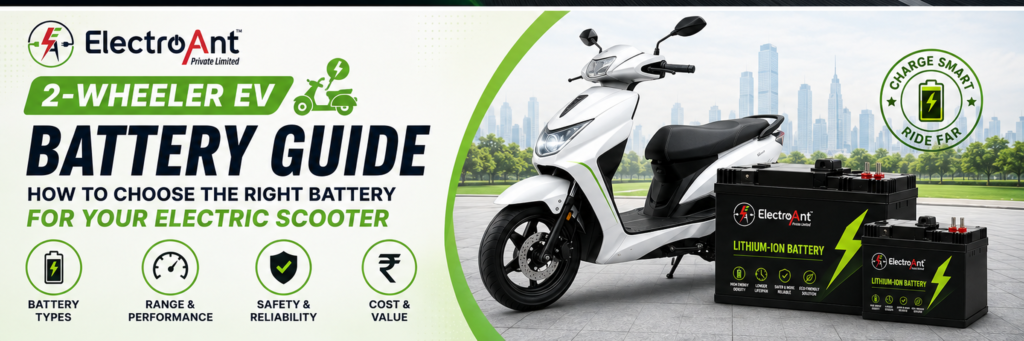
Electric vehicles are becoming increasingly popular as more people and businesses look for efficient, reliable, and cost-effective mobility solutions. At the heart of every electric vehicle is its battery, which directly influences range, performance, charging, and overall usability.
Among the different battery technologies available today, lithium-ion batteries have become one of the most widely used solutions for electric vehicles. Their combination of energy density, lightweight design, efficiency, and performance makes them a preferred choice for many modern EV applications.
What Is a Lithium-Ion Battery?
A lithium-ion battery is a rechargeable battery that stores and releases electrical energy through the movement of lithium ions between electrodes. Lithium-ion technology is widely used in electric scooters, electric motorcycles, e-rickshaws, commercial vehicles, energy storage systems, and many other applications.
The technology can be designed in different configurations and chemistries depending on the specific requirements of the vehicle or application.
Why Are Lithium-Ion Batteries Better for EVs?
Lithium-ion batteries offer several advantages that make them well suited for modern electric vehicles. From weight and energy density to charging and maintenance, they provide benefits that can improve the overall EV experience.
1. Higher Energy Density
One of the biggest advantages of lithium-ion batteries is their high energy density. They can store a substantial amount of energy in a relatively compact battery pack.
This is particularly important for electric vehicles because available space is limited. A compact battery pack can provide the required energy without unnecessarily increasing the vehicle’s size or weight.
2. Lightweight Compared to Traditional Batteries
Battery weight is an important consideration for electric vehicles. Traditional lead-acid batteries are generally heavier, while lithium-ion battery packs can provide comparable energy storage with a lower overall weight.
A lighter battery can help support better vehicle efficiency, handling, and usability, depending on the vehicle design.
3. Better Suitability for Electric Vehicles
Lithium-ion technology is well suited to EV applications because it can provide the power and energy characteristics required by electric motors.
Depending on the battery design, lithium-ion packs can be customized for different voltage, capacity, size, and power requirements.
4. Efficient Charging
Lithium-ion battery systems can support efficient charging when paired with a compatible charger and properly designed battery management system.
Charging time depends on several factors, including battery capacity, charger output, charging current, temperature, and battery specifications. Therefore, the right battery and charger combination is essential.
5. Low Maintenance
One of the practical advantages of lithium-ion batteries is their relatively low maintenance requirements. Unlike conventional lead-acid batteries, lithium-ion battery systems do not require regular electrolyte or water top-ups.
This makes them convenient for users who rely on their electric vehicles for regular commuting or commercial operations.
6. Longer Service Life Potential
When properly designed, used, and maintained, lithium-ion battery packs can offer a long service life. Actual battery life depends on factors such as battery chemistry, charging habits, operating temperature, depth of discharge, usage patterns, and battery management.
Using a suitable charger and following the manufacturer’s recommended charging and operating practices can help maintain battery performance.
7. Advanced Battery Management System
Modern lithium-ion battery packs are commonly equipped with a Battery Management System (BMS). The BMS monitors important battery parameters and helps manage charging, discharging, cell balancing, and protection functions.
A properly designed BMS is an important part of a reliable lithium-ion battery system and should be selected according to the requirements of the specific application.
8. Flexible and Customized Battery Solutions
Another important advantage of lithium-ion technology is its flexibility. Battery packs can be designed according to specific application requirements, including voltage, capacity, dimensions, power output, and installation space.
This makes lithium-ion batteries suitable for a wide range of applications, from electric scooters and motorcycles to e-rickshaws, commercial EVs, and energy storage systems.
Lithium-Ion Battery vs Lead-Acid Battery
Both lithium-ion and lead-acid batteries have their own applications, but lithium-ion technology offers several advantages for modern EV requirements.
- Weight: Lithium-ion batteries are generally lighter.
- Energy Density: Lithium-ion batteries generally offer higher energy density.
- Maintenance: Lithium-ion battery systems typically require less routine maintenance.
- Charging: Lithium-ion systems can support efficient charging with compatible charging equipment.
- Design Flexibility: Lithium-ion packs can be customized for different EV applications.
- Performance: Lithium-ion technology can provide suitable power and energy characteristics for modern EV systems.
Where Are Lithium-Ion Batteries Used?
Lithium-ion batteries are used across a wide range of electric mobility and energy applications, including:
- Electric scooters
- Electric motorcycles
- E-rickshaws
- Electric loaders
- Commercial electric vehicles
- Portable power systems
- Energy storage applications
- Customized battery packs
How to Choose the Right Lithium-Ion Battery?
Choosing the right lithium-ion battery is about more than simply selecting the highest capacity. The battery should be compatible with the vehicle and its intended application.
Before purchasing a lithium-ion battery, consider:
- Voltage: Select the voltage recommended for your vehicle or application.
- Capacity: Choose a suitable Ah or energy capacity based on your usage requirements.
- Battery Chemistry: Select the appropriate chemistry for your application and operating conditions.
- BMS: Ensure the battery pack has a suitable Battery Management System.
- Size and Weight: Check the available installation space and vehicle requirements.
- Charger Compatibility: Make sure the charger is compatible with the battery specifications.
- Warranty and Support: Consider warranty coverage, technical support, and after-sales service.
Why Choose ElectroAnt for Lithium-Ion Battery Solutions?
ElectroAnt provides customized lithium-ion battery solutions for different electric mobility and energy applications. A customized battery approach can help address specific requirements related to voltage, capacity, dimensions, power, and application.
Whether you need a lithium-ion battery solution for an electric two-wheeler, e-rickshaw, electric loader, or another application, selecting the right battery specifications is essential for reliable performance.
By discussing your requirements with a professional battery manufacturer, you can identify a battery solution that is better suited to your vehicle and usage conditions.
Conclusion
Lithium-ion batteries have become an important part of modern electric mobility because of their high energy density, lightweight design, charging efficiency, low maintenance requirements, and flexibility.
However, battery quality, proper design, BMS, charger compatibility, and correct application are just as important as the battery technology itself. Choosing the right battery solution can help you get better usability and reliable performance from your electric vehicle.
If you are looking for a customized lithium-ion battery solution for your EV or energy application, explore the solutions offered by ElectroAnt and discuss your specific requirements with their technical team.
Choose lithium-ion technology. Choose a smarter power solution for your EV.
Leave a Reply